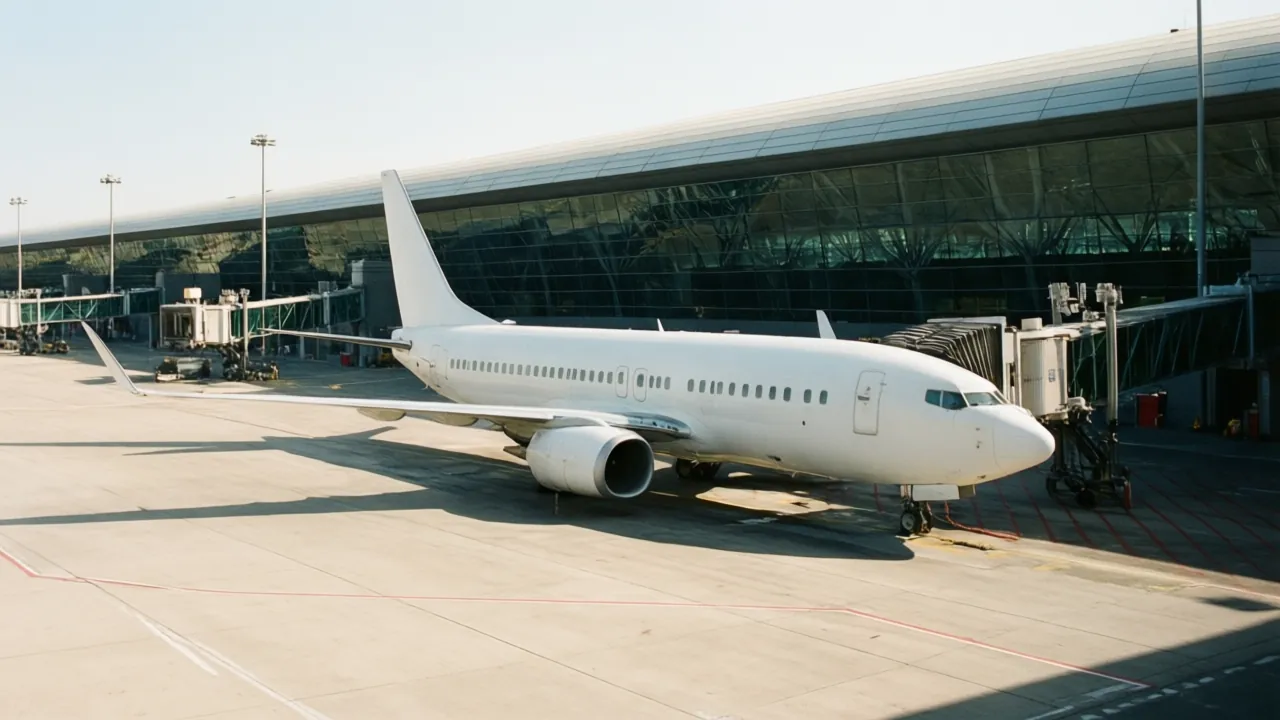
Free Shuttle BusAvailable for everyone every 4 minutes during the day.
JAL DeadlinesCannot board if late for 10 min gate deadline.
Information as of writing.
Tokyo’s Haneda Airport handles a huge number of domestic flights, and it has three passenger terminals. Going to the wrong one is an easy mistake, and moving between them takes time. This guide explains which airlines use which terminal, how JAL’s Terminal 1 is laid out and how to travel between terminals, based on the official pages of Haneda Airport, JAL and ANA as of the time of writing (November 2026).
Which airline uses which terminal
| Terminal | Domestic flights | International flights |
|---|---|---|
| Terminal 1 | JAL, Japan Transocean Air, Skymark, StarFlyer | |
| Terminal 2 | ANA, AIRDO, Solaseed Air | ANA (some ANA flights use Terminal 3) |
| Terminal 3 | Many airlines, including JAL |
no flights of this type
Based on Haneda Airport's FAQ (November 2026). Codeshare flights may use the operating airline's terminal; check your booking.
According to Haneda Airport’s own FAQ, the terminals are generally used as follows:
- Terminal 1 (domestic only): Japan Airlines (JAL), Japan Transocean Air, Skymark Airlines and StarFlyer.
- Terminal 2 (domestic and international): ANA, AIRDO and Solaseed Air for domestic flights. Terminal 2 also has ANA international flights.
- Terminal 3 (international only): many international airlines, including JAL’s international flights.
The airport adds that “other rules may apply” for codeshare flights, so the airline on your ticket may not be the airline that decides your terminal. A common example: ANA sells seats on flights operated by StarFlyer, and ANA states that all StarFlyer-operated codeshare flights at Haneda use Terminal 1, not Terminal 2. Check the operating airline and the terminal in your booking.
ANA international flights can leave from either Terminal 2 or Terminal 3, so check the terminal for your specific flight on ANA’s flight status page.
JAL’s Terminal 1: South Wing or North Wing
JAL divides Terminal 1 by destination. Your check-in, bag drop and security area depend on where you are flying:
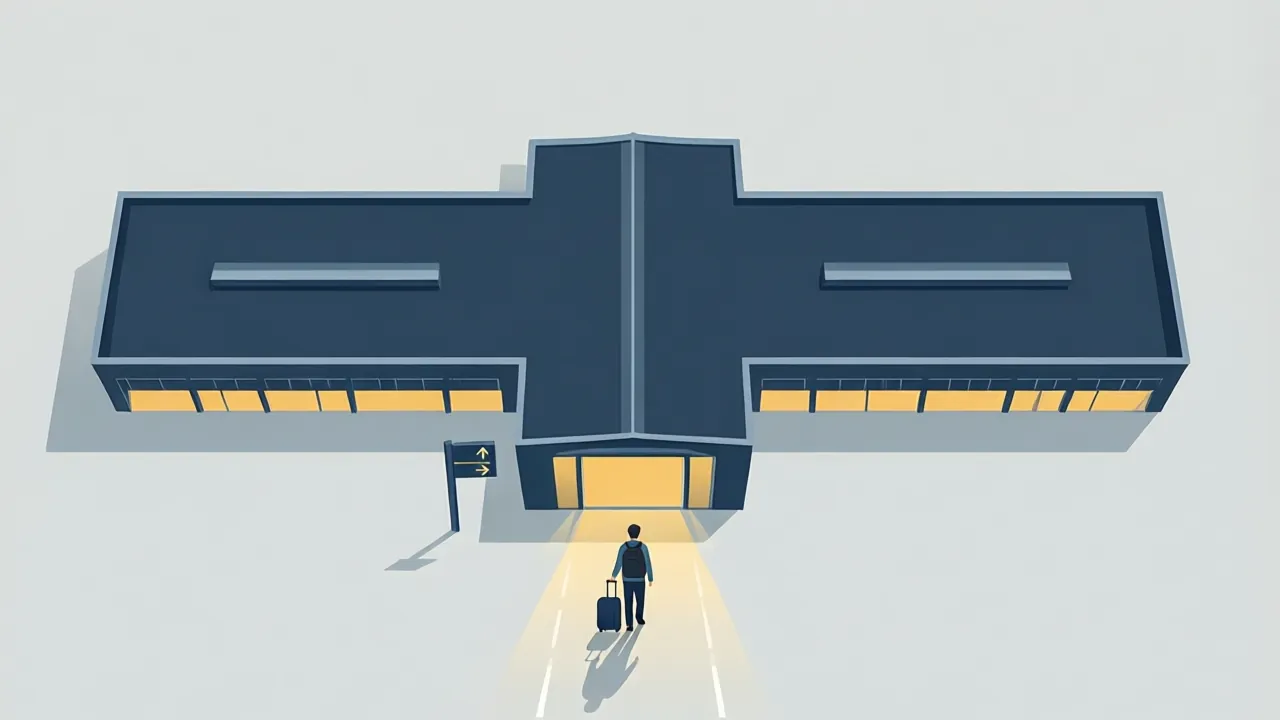
Based on JAL's Haneda Airport pages (November 2026).
- South Wing: flights to the Chugoku, Shikoku, Kyushu and Okinawa regions (for example Hiroshima, Fukuoka or Naha).
- North Wing: flights to Hokkaido, Tohoku, Hokuriku, Tokai and Kinki (for example Sapporo, Komatsu or Osaka).
If you arrive by train, check the wing before you leave the platform. The terminal is long, and walking from one end to the other with a suitcase takes a while.
Each terminal at Haneda is long from end to end, so a connection of only about 30 minutes can be tight, even within the same terminal.
The North Satellite (gates 26 to 29)
On September 1, 2026, a new North Satellite opened on the north side of Terminal 1 for JAL Group domestic flights. JAL says these gates (26 to 29) allow direct boarding without a bus, but the nearest security checkpoints are E and F, and the walk from security to the gates takes longer than before.
JAL also notes that mobile reception near the North Satellite was unstable at the time, so it asks passengers to save a screenshot of their boarding QR code before going to the gate.
Deadlines at Terminal 1
From the same date, JAL strictly applies these deadlines for domestic flights from Haneda:
- Check in baggage at least 30 minutes before departure.
- Pass security at least 20 minutes before departure.
- Be at the boarding gate at least 10 minutes before departure.
JAL states that you will not be able to board if you are late. For more on timing, see how early to arrive for a domestic flight in Japan.
Moving between terminals
| Who can use it | Notes | |
|---|---|---|
| Free shuttle bus | Everyone | Every 4 minutes from 5 a.m. to 8 p.m.; every 8 minutes until midnight |
| Keikyu Line or Tokyo Monorail (free ticket) | Passengers connecting to or from an international flight | Get the ticket at an information counter; show passport and boarding pass |
| Underground walkway (Terminals 1 and 2) | Everyone | About 400 m; out of service during construction at the time of writing |
Based on Haneda Airport's guide to travel between terminals (November 2026).

Free shuttle bus (for everyone)
The free shuttle bus is the standard way to move between terminals. Haneda Airport lists these details:
- Routes: Terminal 1 to Terminal 2, Terminal 1 to Terminal 3, and loops that link all three.
- Frequency: every 4 minutes from 5 a.m. to 8 p.m., and every 8 minutes from 8 p.m. to midnight. The first buses leave before 5 a.m., and the last ones after 1 a.m.
- Where to board: bus stops 8 and 9 on the 1st floor (arrivals level) of Terminals 1 and 2, and bus stop 0 on the 1st floor of Terminal 3.
- Cost: free.
The airport warns that buses may run late because of road congestion, so leave a margin.
Free train ticket (only for connecting passengers)
The Keikyu Line and the Tokyo Monorail both stop at all three terminals. If you are connecting between a domestic and an international flight, or between two international flights, you can get a free “Transit Boarding Ticket” at the information counter of your terminal. Staff check your passport and boarding pass. If you are not connecting, you need a normal train ticket.
Walking between Terminal 1 and Terminal 2
There is an underground passage of about 400 meters with a moving walkway between Terminals 1 and 2. At the time of writing, Haneda Airport says it is out of service because of construction work on a connecting walkway. You can still move between the two terminals, so check the airport’s guide on the day.
A concrete example: flying ANA to Sapporo and JAL back to Osaka
Imagine you fly ANA from Haneda to Sapporo, and a few days later you fly JAL from Sapporo back to Haneda to connect to a JAL flight to Osaka.
- On the way out, go to Terminal 2 for the ANA flight.
- On your return, you land at Terminal 1 (JAL). Your Osaka flight also leaves from Terminal 1, from the North Wing, so you do not need the shuttle bus.
- If your second flight were on ANA instead, you would need the free shuttle bus from bus stop 8 or 9 to Terminal 2, and enough time to pass security again.
Things to watch out for
- Check the operating airline. Codeshare flights can use a different terminal from the airline on your ticket.
- Allow time for the bus. Even with a bus every few minutes, waiting, loading luggage and traffic add up.
- Know your wing at Terminal 1. South Wing for western Japan and Okinawa, North Wing for the north, Osaka and Nagoya regions.
- Save your boarding pass. A screenshot of the QR code helps if mobile signal is weak near the gate.
FAQ
Which terminal is for international flights only?
Terminal 3 is for international flights only.
How can all passengers move between terminals for free?
They can use the free shuttle bus.
Which wing of Terminal 1 is for flights to Okinawa?
Flights to the Okinawa region use the South Wing.
Who can get a free train ticket between terminals?
Passengers connecting between domestic and international flights, or between two international flights, can get one.
Summary
- Terminal 1: JAL, Japan Transocean Air, Skymark and StarFlyer (domestic only).
- Terminal 2: ANA, AIRDO and Solaseed Air domestic flights, plus ANA international flights.
- Terminal 3: international flights only.
- Between terminals: free shuttle bus for everyone; free train ticket only for passengers connecting to or from an international flight.
The information in this guide is current as of the time of writing and is based on the official websites of Haneda Airport, JAL and ANA. Facilities and arrangements can change, especially during construction, so please check the airport and airline websites before you travel.
Some images in this article are AI-generated illustrations. They do not show a real airline, airport or aircraft.